
Read all the latest news from Crisis. Use the filters to browse or search for stories. We hold news articles from 2014 onwards.
You can support Crisis and our work through donating, volunteering, campaigning, fundraising or shopping.

The Vagrancy Act – the archaic law that made homelessness a crime in England and Wales – has finally been repealed.

The Experts by Experience Panel is a group of people with lived experience of homelessness (both...

This decision will directly lead to homelessness. Find out more.

The homelessness minister has replied to our open letter to the Prime Minister. Here’s what it says about our progress towards a future free from homelessness.

We’ve handed in our open letter signed by over 20,000 people to No10, calling on the Government to publish a plan to end homelessness.

We’re proud to share that 58 employers have now pledged their support to the Homelessness Alliance.

We’ve just launched a project to transform volunteering so that we are better equipped to end homelessness.

This is a monumental campaign win and is the culmination of years of campaigning and pressure from all parts of society.
A little over a year ago, the Homelessness Covenant was launched, helping employers take a vital step towards ending homelessness.
We’ve updated our Privacy Policy effective June 28th, 2024, to enhance transparency and comply with GDPR.

This month, from Monday 3 to Sunday 9 June, we will be celebrating our incredible Crisis volunteer community; so, take some time out and read on to learn more about this special week...

Strategic Communications Project Manager Ruth Stone shares three things you might not know about homelessness this LGBTQ+ History Month.
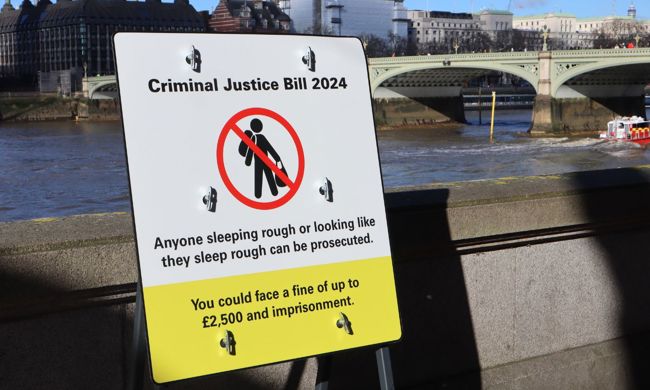
We put up this sign in Westminster to show what could happen if we don’t stop the UK Government’s plans to criminalise homelessness.
Homelessness levels in Scotland are projected to rise by a third in the next two years without a...

We hand in petition signed by 10,000 people calling on the Government to drop plans to criminalise homelessness.

Campaign win: new law to stop rogue landlords exploiting people facing homelessness passes in Parliament
The Bill to stop rogue landlords exploiting people facing homelessness passes vital test in Parliament.
Crisis launches invitation to tender for evaluation of the place-based approach to ending homeles...
‘Reconnection’ is a process whereby people experiencing homelessness who have a connection to ano...

The Bill to tackle rogue landlords has been approved by a key committee of MPs. Here’s what happens next.